Man Utd summer rebuild in focus after Sunderland draw exposes squad issues

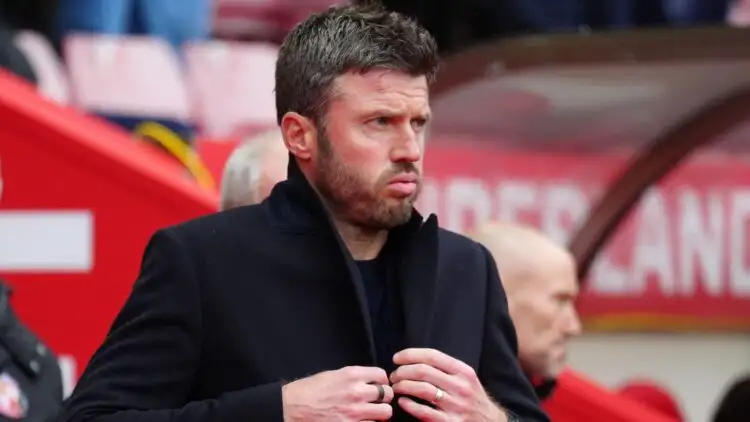
Manchester United’s Sunderland stalemate shows just how much work still awaits Michael Carrick
A week after securing a return to the Champions League, Manchester United arrived at the Stadium of Light with the sort of relaxed energy that usually comes once the hard part is done.
The problem was, this performance also served as a reminder that the hard part may actually be about to begin.
United’s goalless draw with Sunderland did not damage anything meaningful in the table. Michael Carrick still has the club on course for a strong finish after an impressive turnaround since taking charge.
But if anyone inside Old Trafford believed qualification alone meant the rebuild was nearly complete, this was a fairly blunt reality check.
There was a lot of shadowboxing, plenty of safe possession, and very little genuine threat.
By the end, the loudest noise from the travelling support was probably relief that the season only has a couple of matches left before attention shifts fully toward the transfer window.
And honestly, that window cannot open quickly enough for United.
The fringe players didn’t really help themselves
Carrick used the trip to Sunderland to rotate and hand opportunities to players sitting somewhere between “squad option” and “uncertain future.” None of them grabbed the moment.
Joshua Zirkzee, making his first Premier League start of 2026, struggled badly. Some sympathy is fair enough.
United created almost nothing through the middle and the service into him was inconsistent.
Still, centre-forwards are judged on presence as much as touches, and Zirkzee never looked capable of unsettling Sunderland’s back line.
When the ball did stick, it only stayed there briefly. His link-up play lacked sharpness, his movement rarely stretched defenders, and his one decent chance ended with a soft header floating over the bar. It felt like one of those afternoons where every action added another question mark.
What made it stranger was the wider context around him. Reports continue to suggest United are open to moving him on this summer, meaning these final games are effectively auditions. They are not exactly endless opportunities either.
Once Carrick pushed Matheus Cunha centrally later in the match, United at least carried a little more menace. Not much, but enough to suggest the side still functions better with a mobile focal point who attacks space aggressively rather than waiting for the game to arrive at his feet.
The stat that really summed things up? United did not register a shot on target until stoppage time. For a club preparing for Champions League football again, that is not ideal viewing.
Why Benjamin Sesko’s absence mattered
United have relied heavily on Benjamin Sesko during Carrick’s revival, and his absence was obvious here.
The Slovenia striker, sidelined with a shin issue, has scored 10 goals in his last 15 appearances and has quietly become one of the key figures in United’s late-season surge. Without him, the attack lacked structure. There was no outlet to pin defenders back consistently, and too many moves simply drifted wide before ending harmlessly.
Sesko is still developing. His hold-up play is not perfect and there are moments where he looks raw. But United look far more dangerous when he is available, which tells its own story about the squad depth behind him.
With European football returning and fixture lists about to become properly unforgiving again, United cannot head into next season relying on one recognised striker. Even if other areas feel more urgent, another centre-forward looks increasingly necessary.
That part feels unavoidable now.
Midfield remains the biggest issue
If the attacking display was flat, the midfield battle was even more revealing.
Casemiro was absent altogether, officially with what Carrick described as an issue that should not affect the final games.
There is also ongoing speculation surrounding appearance-related clauses in his contract, though the club will not publicly entertain that conversation.
Either way, his absence exposed a bigger concern. United still do not look equipped for life after him.
Manuel Ugarte missed out after taking a knock in training, leaving Mason Mount and Kobbie Mainoo to operate deeper. It never really clicked.
Mainoo tried to drive things forward but was left carrying too much responsibility, while Mount looked uncomfortable in a role that does not naturally suit his strengths.
To his credit, Mount kept working and showed flashes of energy, but United were second-best centrally for long spells. Noah Sadiki and Granit Xhaka controlled the rhythm for Sunderland and did so with a calmness United never matched.
That probably frustrated Carrick more than anything else.
The bigger concern is structural. United do not simply need a Casemiro replacement. They need balance, depth, athleticism and reliability in midfield. One signing will not fix that. It may take two.
And those decisions become even bigger if Carrick gets the permanent job.
A small reminder from Shea Lacey
One of the more interesting subplots around Carrick’s final weeks has been his handling of younger players.
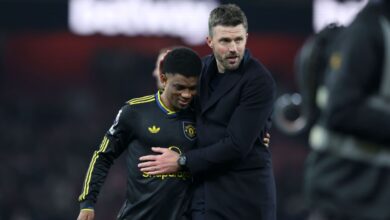
Amad Diallo’s difficult run continued here. The winger still has enormous backing inside the club and nobody is suddenly questioning his long-term future after a rough spell. But form matters, especially at a club where competition can change quickly.
That is where Shea Lacey comes into the conversation.
The 19-year-old made a lively impression during Darren Fletcher’s brief interim spell earlier in the season, and there is growing curiosity among supporters about why he has barely featured since Carrick arrived. With little left riding on the final two matches, there is a genuine argument for giving him meaningful minutes.
At the very least, he would bring unpredictability. United looked badly short of that against Sunderland.
Sometimes young players inject life into stale games simply because they have not yet learned to play within themselves. United could probably use a bit of that right now.
The encouraging part for United is that Carrick has already dragged this squad much further than many expected a few months ago. Champions League qualification matters financially, emotionally and competitively.
But this draw underlined something important: progress does not erase weaknesses.
United still need more quality, more depth and more reliability if they are serious about staying among Europe’s top sides next season. The first-choice XI can compete. Beyond that, the drop-off remains obvious.
That makes the next few months massive for the club, regardless of who officially sits in the manager’s chair.
One thing feels certain after Sunderland, though. United’s summer rebuild may be bigger than many originally thought.