Chelsea project concerns grow as Mauricio Pochettino comments on BlueCo plan clarity

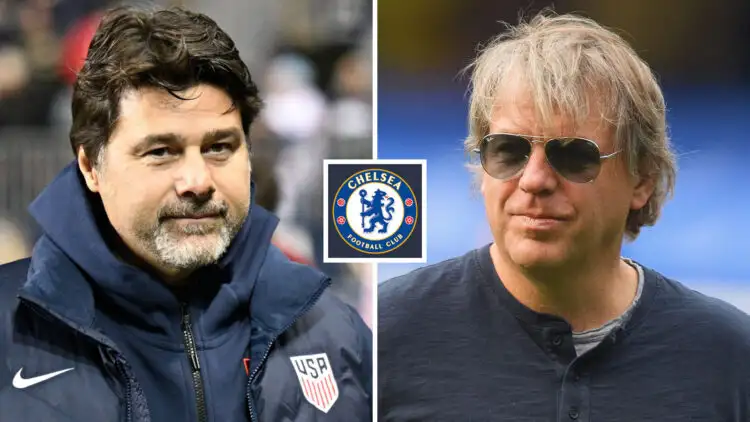
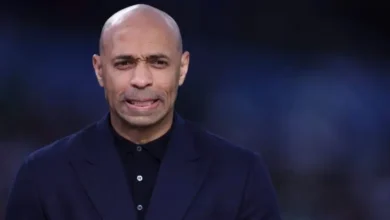
Mauricio Pochettino’s spell at Chelsea may have ended with a late-season lift, but his reflections on life inside Stamford Bridge under BlueCo have opened a more uncomfortable conversation about direction, clarity, and what exactly the club were trying to build during his year in charge.
Speaking on The Overlap, the former Chelsea head coach admitted there was a disconnect between what he understood at the start and what actually unfolded once the job was underway.
It wasn’t framed as bitterness, more a sense of confusion that still lingers now he’s moved on.
“What I understood didn’t happen after,” he said, a line that probably lands harder the longer you sit with it.
Chelsea, under Todd Boehly and Behdad Eghbali’s consortium, have been operating under what’s been branded the BlueCo project since 2022, following the departure of Roman Abramovich.
It’s been a turbulent stretch by any measure — multiple managerial changes, squad overhauls, and a constant search for stability that never quite arrives.
Pochettino was the third permanent manager of that era, arriving after Graham Potter and before Enzo Maresca.
In between, the club also leaned into interim and short-term appointments, with Liam Rosenior later becoming the fifth permanent manager in four years, a figure that quietly sums up the churn at Stamford Bridge.
What makes Pochettino’s comments stand out is the tone of frustration around communication rather than results. He pointed to a lack of shared understanding between those running the club and those expected to implement the vision on the pitch.
“I think they have a plan, it’s completely different to what was Chelsea in the past with [Roman] Abramovich. It’s true that it’s not easy because it’s difficult for people to understand,” he explained.
That sense of distance between strategy and execution came through again when he spoke about the internal structure.
“Football is not an ordinary business and sometimes people struggle. But I think they (Chelsea’s owners) need to explain the plan,” he added, suggesting that clarity wasn’t always filtering down to the dressing room level.
There was also a broader reflection on what Chelsea used to represent. For years, success at the club was defined almost bluntly — win trophies or fall short. Pochettino contrasted that with what he inherited, describing a period of transition where expectations and reality didn’t always align.
“Chelsea was about winning, you can’t go in there and finish in a certain position and accept it. It was about winning,” he said, pointing back to the Abramovich era as a very different environment.
“In the past, they won Champions Leagues, had the best and most experienced players. But that was a completely different project.”
Even so, he did feel there were signs of progress towards the end of his spell. Chelsea finished sixth, reached the Carabao Cup final, and pushed Manchester City in the FA Cup semi-final. Results improved late on, and performances followed a similar upward curve.
“When we arrived the team was 12th in the Premier League, we didn’t play in Europe… there were things we needed to put in place,” he said, describing a season that gradually stabilised after a difficult start.
But there was also a sense of frustration that the work wasn’t fully recognised internally. “Why I think I am disappointed with things internally is that under our assessment and our vision, it was a normal process to create something solid for the future,” he explained.
He also suggested that Chelsea were often undone in key moments more by inexperience than tactical issues.
“We finished sixth winning the last five or six games… we played Manchester City in the semi-final of the FA Cup, in both games we deserved to win. But because of experience we didn’t win,” he said.
That final observation feels important in the wider context of Chelsea’s ongoing rebuild. The squad is still young, still evolving, and still searching for consistency in high-pressure matches, something Pochettino clearly felt was improving, even if the project moved on without him.
Now, with Enzo Maresca in charge and another managerial cycle underway, Pochettino’s comments hang in the background as a reminder of how fragile alignment can be at the club.
The ideas might be ambitious, but the execution — and communication — remains the ongoing question.
And for whoever sits in the dugout next, whether it’s Maresca long-term or another name further down the line, that same issue doesn’t look like it’s going away anytime soon.