
Atletico Madrid empty bus controversy sparks debate after Arsenal Champions League elimination

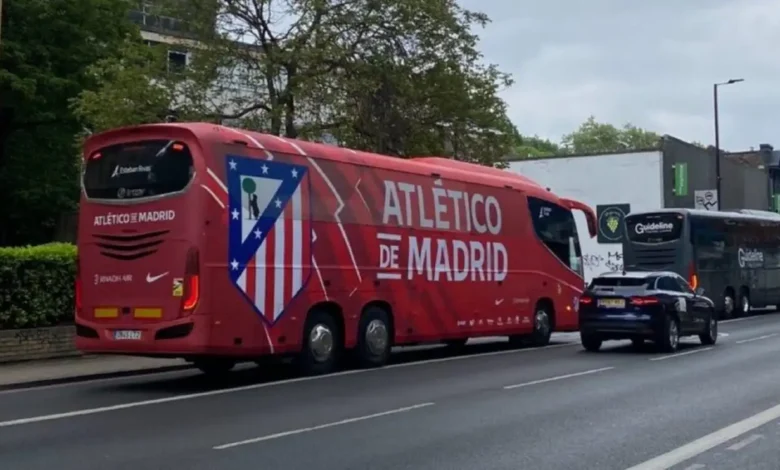
Atletico Madrid’s empty bus raises eyebrows as Arsenal end Champions League hopes
Atletico Madrid’s Champions League run came to a quiet end against Arsenal, but the story around their semi-final exit has drifted well beyond the pitch.
Diego Simeone’s side were edged out across two legs, unable to find a way past an Arsenal team that controlled large spells of the tie with real authority.
It wasn’t a chaotic collapse or a controversial ending. It was more straightforward than that, Arsenal managed the tempo, kept possession when it mattered, and gradually took control of the contest.
Atletico, usually so effective at dragging opponents into uncomfortable territory, found themselves the ones being managed out of the game.
For a team built on disruption, it felt oddly familiar in the worst possible way: contained, limited, and ultimately outmanoeuvred.
Arsenal’s control tells the story
Across the semi-final, Arsenal’s approach was measured and composed, particularly when the pressure rose.
They dictated key moments in possession and didn’t allow Atletico the kind of chaotic rhythm they normally thrive on.
That control over the tie proved decisive. Atletico’s intensity never fully surfaced in the way Simeone would have wanted, and the margins began to tilt steadily in Arsenal’s favour.
By the final whistle, the narrative was less about drama and more about structure. Arsenal simply handled the game better.
The bus that travelled without anyone on it
Away from the football itself, another detail from Atletico’s trip to London has sparked conversation for very different reasons.
While the squad and coaching staff flew in for the match, the club’s branded team bus also made the journey by road despite being empty.
According to data highlighted by Pledgeball, the vehicle covered roughly 1,700 kilometres for the trip, producing an estimated 11 tonnes of CO2 equivalent.
It’s the sort of decision that raises a simple question: why?
In a sport where efficiency is obsessively tracked on the pitch, the logic behind such an off-pitch decision is harder to explain.
Identity, tradition and where the line gets blurred
Atletico Madrid have long been admired for their consistency under Diego Simeone. In an era where managers rarely survive long-term projects, their commitment to stability stands out. So does their football identity, physical, disciplined, and fiercely organised.
It’s a style that has delivered success and earned respect across Europe. They don’t follow trends, and they rarely bend to external pressure. That stubbornness has become part of their character.
But there’s a growing sense that not every tradition needs preserving.
The empty bus is not about tactics or culture — it’s about practicality. And in that sense, it feels less like identity and more like inertia.
A wider conversation football can’t avoid
Football is increasingly being asked to reckon with its environmental impact, from travel to infrastructure to day-to-day operations.
Some clubs are already moving in that direction, including several in the English Football League who have signed up to the Sustainable Travel Charter backed by Pledgeball.
The idea isn’t complicated. It simply asks clubs to think more carefully about how they travel and whether certain decisions are actually necessary.
That’s what makes Atletico’s situation stand out. It wasn’t forced, it wasn’t unavoidable, it was simply a choice that didn’t need to be made.
What lingers after the defeat
On the pitch, Arsenal’s victory will be remembered for control and composure. Atletico will reflect on a semi-final where they were gradually edged out rather than overwhelmed.
But off the pitch, the image of an empty bus completing a 1,700-kilometre journey may stick longer than expected. Not because it changed the outcome, it didn’t but because it reflects a wider disconnect between modern football’s ambitions and some of its habits.
For Simeone’s side, there will be other nights in Europe, other runs to chase. That part of their story is far from finished.