Pep Guardiola responds to Rodri’s fixture concerns with blunt message over too much schedule

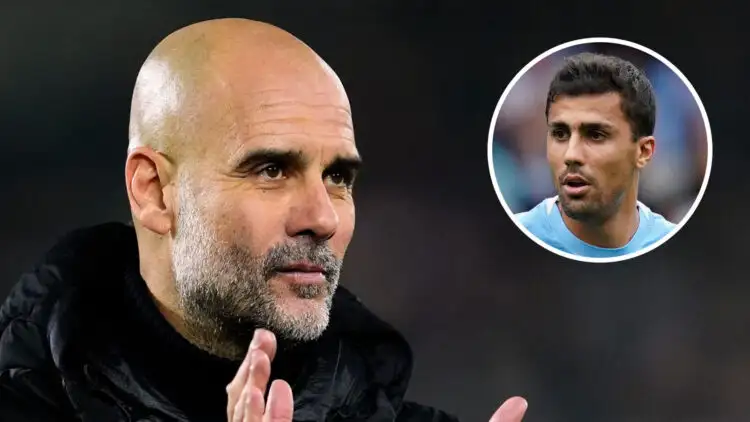
Pep Guardiola shrugs off fixture complaints as Rodri concerns highlight football’s growing schedule strain
The debate around football’s relentless calendar isn’t going anywhere and if anything, it’s only getting louder as the season edges towards the end.
But if you’re expecting sympathy from Pep Guardiola, you might be looking in the wrong place.
The Manchester City manager has made it clear he sees the issue differently, even as some of his own players begin to question how sustainable the current workload really is.
“It is what it is”
City’s campaign tells its own story. By the time the season ends, they will have played around 60 matches across all competitions, deep runs in domestic cups, plus another push in Europe.
It’s the kind of schedule that tests even the deepest squads.
Still, Guardiola doesn’t sound particularly concerned.
“It is what it is,” he said. “Arsenal are in the Champions League semi-final, so it is what it is. When we won the treble, we had a similar calendar, but I learned a long time ago not to expect anything different. We have to adapt and take it game by game.”
There’s a sense of acceptance in that stance. Not necessarily agreement with the system but no expectation that it will change either.
And perhaps that’s the key difference.
Rodri’s warning and a growing concern
The conversation has gained traction largely because of comments from Rodri, who has been unusually open about the toll modern football is taking.
At 29, and coming off a Ballon d’Or-winning year, he’s hardly someone struggling for form or relevance. If anything, he’s at his peak. Which makes his warning all the more striking.
“Either we stop or I won’t make it to 32,” Rodri stated. “You have to know how to pace yourself, because the body has its limits and we all have an expiration date.”
It’s not just physical fatigue he’s pointing to either.
“When that European Championship we won ended, I was extremely worn out from reaching the final stages of everything for 5-6 consecutive years,” he added.
“More than physically, mentally I didn’t know how to face it in the following years because of the burnout. I reached the peak, I almost reached the maximum I could have achieved, and it was a moment I used to recharge and recharge.”
Those aren’t throwaway comments. They reflect a wider concern across the game—one that’s becoming harder to ignore as more competitions, more matches, and shorter recovery periods continue to stack up.
Guardiola’s blunt response
Guardiola, though, isn’t shifting his position.
If anything, he doubled down when comparing schedules across different leagues.
“It can happen in other countries, but here it is what it is. We have to adapt. If you don’t like it, go and train in France or Portugal. I like being here, and I’ve said many times when I was at Barcelona and saw managers here complain about the schedule, it has always been like this. So I never expected anything different.”
It’s a typically direct answer.
There’s no attempt to soften the edges of it, no real concession to the idea that things might need to change. Just a straightforward view: this is the Premier League, this is how it works, and players have to deal with it.
The tension here is obvious.
On one side, players like Rodri are raising legitimate concerns about longevity and burnout—issues that go beyond one season or one competition.
On the other, managers like Guardiola are working within a system that rewards success with more games, not fewer.
And with a World Cup on the horizon, the calendar isn’t about to ease up.
For clubs like City, success brings a heavy schedule. For players, it brings a different kind of challenge how to maintain peak performance without crossing the line into exhaustion.
There’s no simple fix, and no immediate solution.
But the conversation is happening more often now. And that usually means something is shifting, even if slowly.